Blog, News and Events

We are revolutionizing the translational potential of animal models in preclinical research. Discover the latest articles and news about our recent activities.

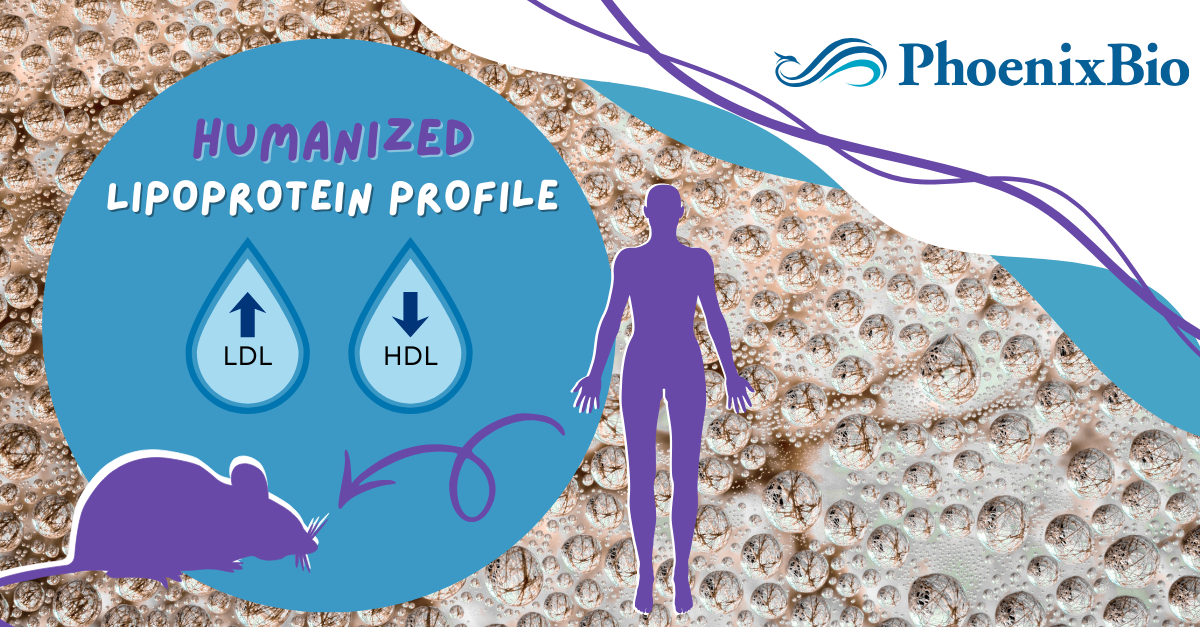
Exploring the Human Lipoprotein Profile of PXB-mice and PXB-cells

Lipids are important biomolecules that contribute to homeostasis. They can act as energy reserves, are used structurally, and play an important role in metabolic processes including drug metabolism. Lipids complex with proteins resulting in a lipoprotein particle that enables the hydrophobic lipids to be transported throughout the body via the blood stream. Changes in the lipoprotein/lipid profile are associated with diseases such as metabolic dysfunction-associated fatty liver disease (MAFLD), atherosclerosis, hypothyroidism, and cardiovascular disease as well as some genetic disorders. As such, therapeutics are being developed to target dyslipidemia.

Topics icon PXB-mouse, Blog, PXB-cells

Translational models with human lipoprotein profile

Translational liver disease models designed to suit your research needs

At PhoenixBio, we strive to help improve human health through the broad application of our humanized liver chimeric mouse model, the PXB-mouse. Our chimeric mouse model has a highly humanized liver, with human-specific metabolism pathways and gene expression as well as human-like lipid profiles, making this a relevant model for drug discovery and development projects. While we commercially produce PXB-mice using a single human hepatocyte donor lot, we understand that some research may require different hepatocyte donors, such as donors with specific characteristics (HLA typing or disease state) or even donors from different species (NHPs, humans, or others). Therefore, we offer custom transplantation services with our host mouse (cDNA-uPA/SCID background) which allows researchers to select and test engraftment of a hepatocyte donor that meet their specific research needs. First, we will highlight research that used a hepatocyte donor transplanted by our expert team into host animals for a rare genetic disease, Ornithine Transcarbamylase Deficiency (OTCD).

Topics icon PXB-mouse, Blog

Translational Liver Disease Models

PhoenixBio is Heading to ISSX 2025. Join Us in Chicago!

We’re thrilled to announce that PhoenixBio will be exhibiting at ISSX 2025, the 25th International Meeting of the International Society for the Study of Xenobiotics. We can’t wait to engage with researchers, industry leaders, and innovators in xenobiotic science from around the globe. We'll be sponsoring a booth and attending ISSX 2025 in person at the Hilton Chicago in Chicago, Illinois from September 21st - 24th, 2025. Meet with our team at Booth #219 to learn more about PhoenixBio's capabilities and how we can help you advance and deliver tomorrow’s technologies.

Topics icon Events

ISSX 2025

Exhibition at EuroTox 2025

The Congress of the European Societies of Toxicology is organizing EuroTox 2025 to focus on this year's theme “Toxicology addresses Society’s real-life risks for sustainable health and well-being”. The 2025 program will focus on cutting-edge scientific breakthroughs and interdisciplinary collaboration. Emerging technologies and methodologies such as humanized liver applications in toxicology will be highlighted, while fostering discussions on public health safety and environmental sustainability. PhoenixBio is excited to be sponsoring a booth and attending the EuroTox 2025 in person at the Megaron Concert Hall in Athens, Greece from September 14th - 17th, 2025. Meet with our team at Booth #A17 to learn more about PhoenixBio's capabilities and how we can help you advance and deliver tomorrow’s technologies.

Topics icon Events

EuroTox PhoenixBio 2025

Cutting Edge Gene Editing in Primary Human Hepatocytes

Gene editing promises cures for a wide range of diseases. Zinc-finger nucleases (ZFNs) were developed as the first programmable editors in the early 2000s, followed by TALENs (Transcription Activator Like Effector Nucleases) about a decade later[1]. However, it was the discovery and application of easy to use CRISPR/Cas9 gene editing methods, that sparked a flurry of new activity since 2013. New gene editing methods that build on this platform continue to be a hot area of research, with the goal of developing techniques that increase specificity and circumvent the need for double-stranded breaks (DBSs) in order to reduce off-target effects and minimize safety concerns[2]. Moreover, increasing the size of sequences that can be modified, and improving editing efficiency in non-dividing cells are also areas of great interest.

Topics icon Blog, PXB-cells

Gene Editing PXB-cells PHHs

Bridging the translational gap: Humanized Liver models as predictive tools for RNA therapeutic success

The field of RNA therapeutics, with its potential for treating a wide range of diseases, continues to experience rapid growth and attracts significant investment. According to the American Society of Gene & Cell Therapy (ASGCT), as of Q1 2025, 35 RNA therapies have been approved globally and another 1,298 are currently in development (between preclinical and pre-registration stages) [1].

Topics icon PXB-mouse, Blog

Bridging the Gap

Sign-up to our newsletter for the latest news and information straight to your inbox