
Hepatocytes form bile canaliculi structures which are formed through tight-junction interactions between neighboring hepatocytes. This interconnected network collects and transports bile components. Interruptions to the bile flow (slowing or stopping) causes a backup of bile and is known as cholestasis. Cholestasis can be a result of intrahepatic complications, including chronic liver disease, cirrhosis, hepatitis, infections, genetic cholestasis, as well as a result from drug-induced liver-injury (DILI).
There are over 1,300 FDA-approved drugs compiled in a DILI risk database and it’s one of the most common reasons why a drug fails to make it to market.1,2 DILI can be due to immune-, metabolism-, or mitochondria-mediated hepatoxicity as well as cholestasis.3 Anticipating DILI has been difficult, and often preclinical models fail to accurately predict it.4 The PXB-mouse, a chimeric mouse with a humanized liver, has the potential to identify DILI-risk with their human-specific drug metabolizing enzyme and transporter expression.5,6 In addition to animal models, there have been developments in new approach methodologies (NAMs) with the aim of using human cells to predict DILI.7 PXB-cells (primary human hepatocytes isolated from the PXB-mouse) are well-suited for use in NAMs, since they are produced consistently from a single donor hepatocyte and can be maintained in culture long-term. Here, we will focus on how PXB-cells can be utilized to predict DILI.
Can PXB-cells improve in vitro DILI predictions?
Various in vitro methodologies are used to evaluate drug metabolism and to predict DILI-risk. Human-based cell models typically use primary human hepatocytes as the gold standard as these cells more closely resemble liver expression of drug metabolizing enzyme levels, unlike immortal hepatoma cell lines. PXB-cells have an advantage over standard cryopreserved primary human hepatocytes since PXB-cells are suitable for long-term culture (>21 days) and are continuously produced using a single hepatocyte donor lot. Moreover, for the majority of the drug metabolizing enzymes, cytochrome P450 (CYP) subfamily PXB-cell expression levels are more consistent with cryohepatocytes than HepG2 and human induced pluripotent stem cell derived hepatocytes (hiPSC-Heps) (Figure 1A) making these cells relevant for in vitro drug evaluation.8 While PXB-cells have lower expression levels of CYP1A2 compared to the average expression of cryopreserved hepatocytes, PXB-cells express significantly more CYP1A2 compared to hiPSC-Heps and HepG2 cells. It is important to note that there is high variability in CYP expression between different donor hepatocytes with up to 3 orders of magnitude differences observed between different donor lots of primary human hepatocytes (Figure 1B).8 Given this, the expression level differences in PXB-cells from PHHs may be attributed to donor lot differences.9 Importantly, unlike the hiPSC-Heps tested, PXB-cells have high expression of phase I drug metabolizing enzymes and transporters and the expression is comparable to PHHs (Figure 2).8 PXB-cells are also suitable for CYP induction studies, for example CYP1A2 and CYP3A4 are induced by 3-methylcholanthrene (3-MC) and rifampicin, respectively, in 3D-cultured PXB-cells.10 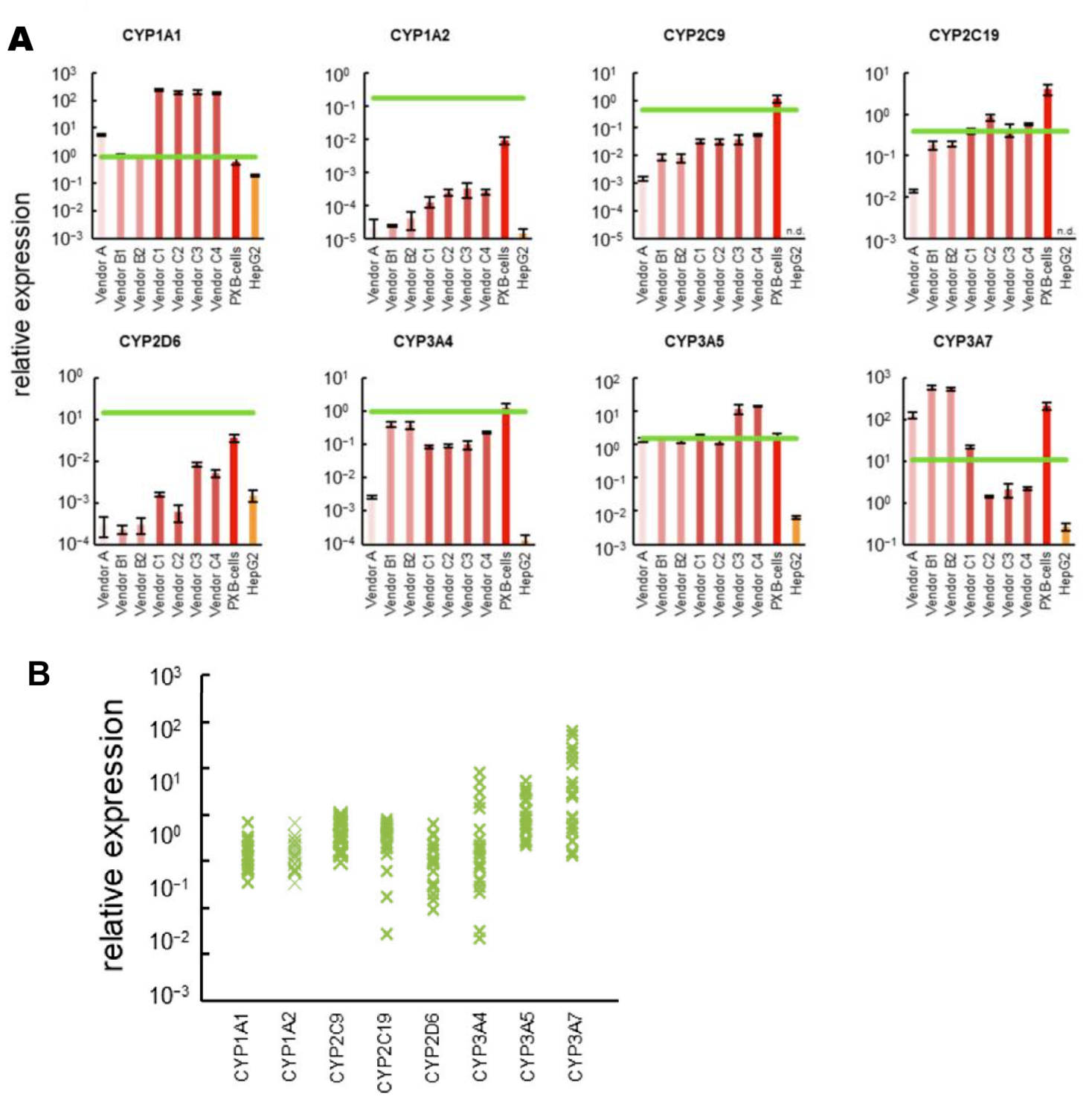
Figure 1: Cytochrome P450 (CYP) expression levels for human induced pluripotent stem cells (hiPSC)-derived hepatocytes from Vendors A-C, PXB-cells, and HepG2 (A) and from 22 cryohepatocyte donors (B). For each CYP, the average expression level of the cryohepatocyte donors are shown by the green bar (A). (modified from Horiuchi et al., 2022)
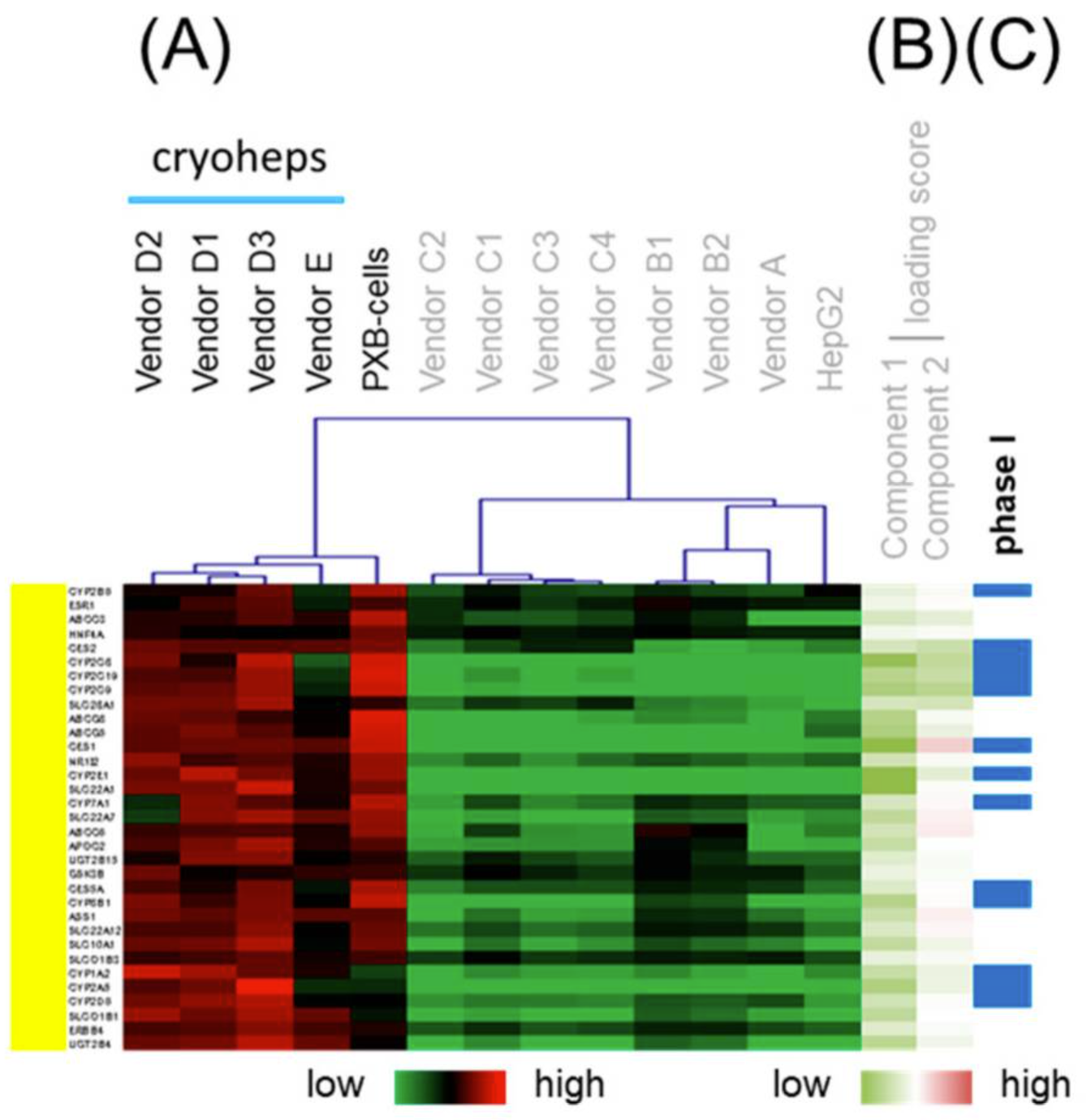
Figure 2: Expression level of phase I drug metabolizing enzymes and hepatic transporters were similar in PXB-cells and PHHs, unlike hiPSC-Heps (vendors A-C). Heatmap expression of genes with a low loading score for PC1 (A) PC1 and PC2 scores (B) and blue lines denote phase I drug metabolizing enzymes. (modified from Horiuchi et al., 2022)
Looking at liver function, secretion of human albumin and urea synthesis is maintained long-term in PXB-cells (Figure 3A and B).11 Depending on the culturing methods secretion can be enhanced, for example by co-culturing with other cell types (intestinal cells), culturing in an oxygenated environment, and even with different culture formats (2D, 3D, etc), albumin levels have been shown to increase compared to control methodologies used (Figure 3A).10,11,12,13 In fact, culturing methods have also been shown to impact urea synthesis (Figure 3B)11 and CYP activity (Figure 4)12. Thus, PXB-cells are a useful tool for long-term prediction of liver dysfunction whether used in traditional monoculture or with other culturing procedures.
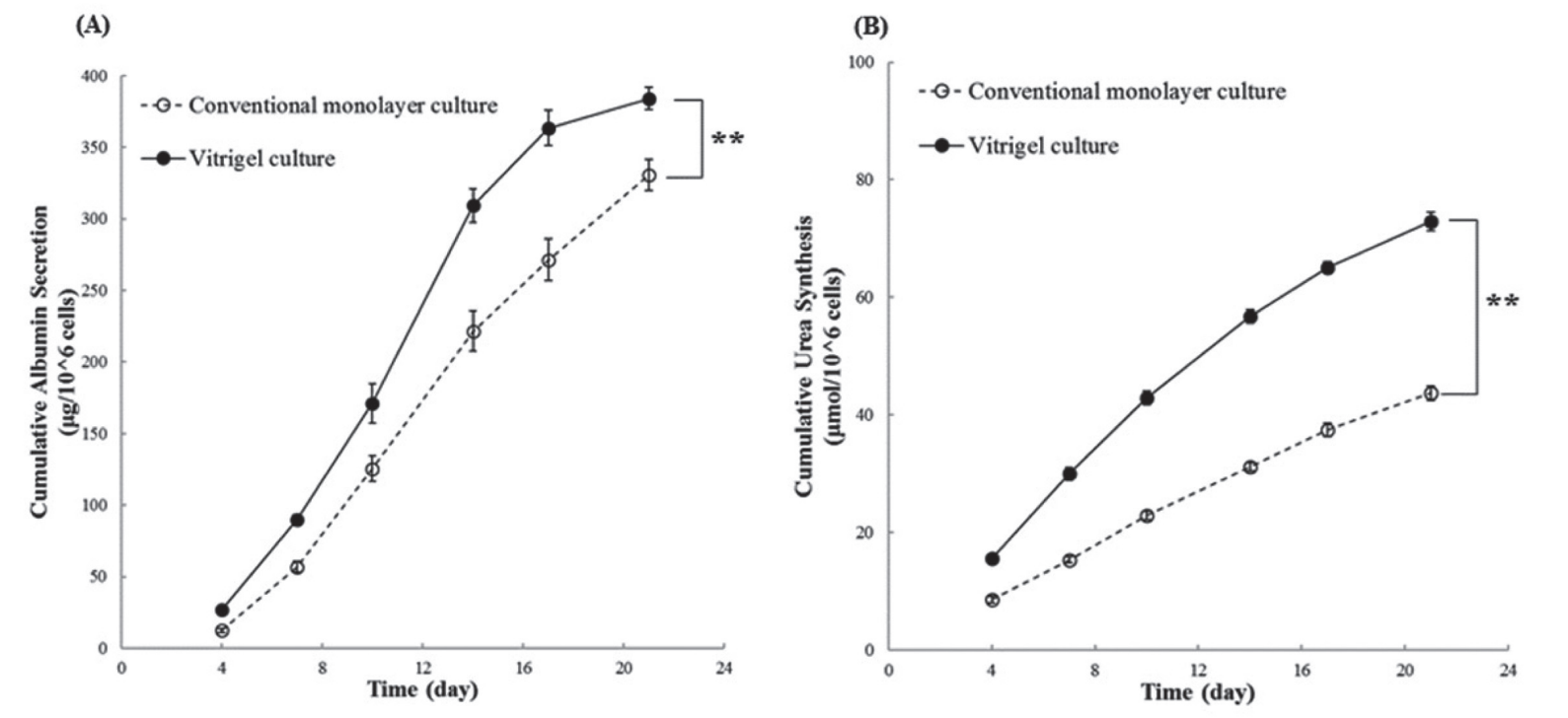 Figure 3: Albumin secretion and urea synthesis were measured in PXB-cells over 21 days. PXB-cells were cultured in commercially available collagen vitrigel membrane chambers (vitrigel culture; closed circle) or collagen coated culture plates (conventional monolayer culture; open circles). Cumulative human albumin (A) and urea (B) levels were measured from Day 4 to Day 21. ** P<0.01 on Day 21 (Watari R et al., 2018)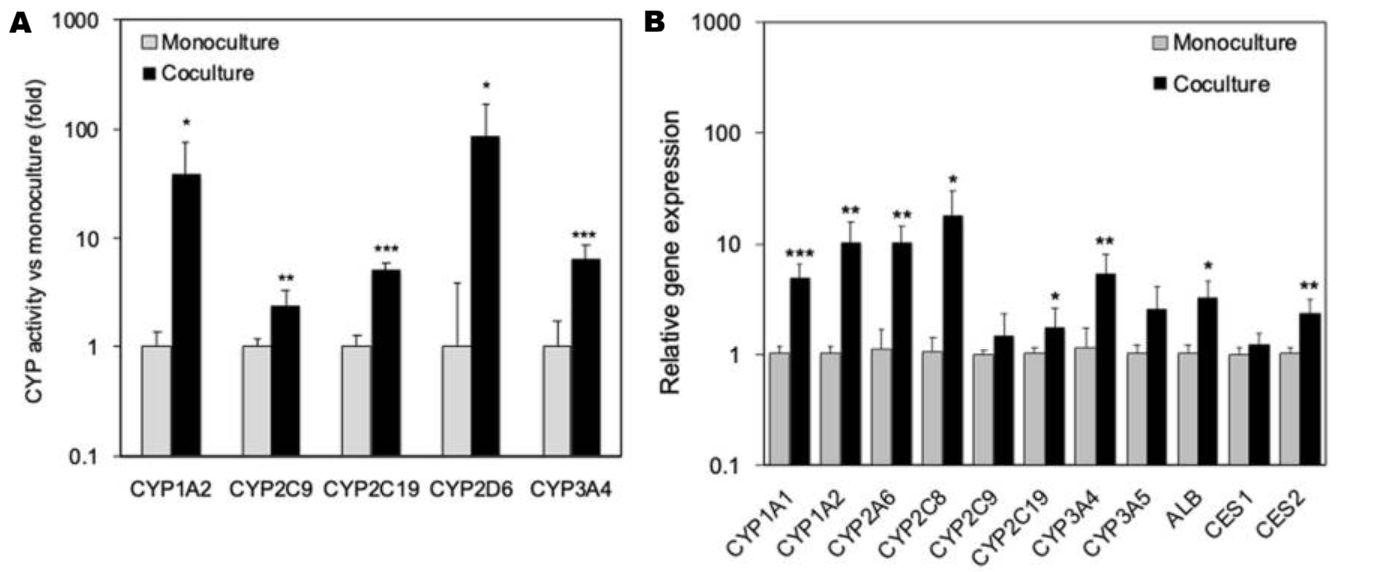
Figure 4: Coculturing PXB-cells with hiPSC-derived intestinal cells increases CYP activity and gene expression. CYP activity was measured for 48 hours in PXB-cells that were monocultured or cocultured with hiPSC-derived intestinal cells (A) Relative gene expression in PXB-cells for CYP enzymes, albumin (ALB), and intestinal human carboxylesterase 1 and 2 (CES1/2). Statistical significance is denoted by: *p<0.05, **p<0.01, and ***p<0.001. (Shinohara M, et al., 2021)
Capturing human toxicity with PXB-cells
Furthermore, in vitro toxicity can be captured using PXB-cells. Aflatoxin B1 (AFB1) is a mycotoxin produced by fungi and is known to cause liver damage. AFB1 induces cytotoxicity in PXB-cells which is dose-dependent.14 PXB-cells outperformed hepatoma cell lines (HepG2 and HepaRG) when determining the half-maximal lethal concentration (LC50) of AFB1 and was comparable to PHHs (Table 1).14 Additionally, PXB-cells were recently used to predict drug-induced vascular toxicity using a hepatic vascular in vitro model.15 PXB-cells, stellate cells, and liver sinusoidal endothelial cells were cultured together to form vascularized hepatic tissue (VHT) which was then used to assess the DILI-risk for known compounds.15 With this model, monocrotaline toxicity was detected with greater sensitivity than traditional methods. 15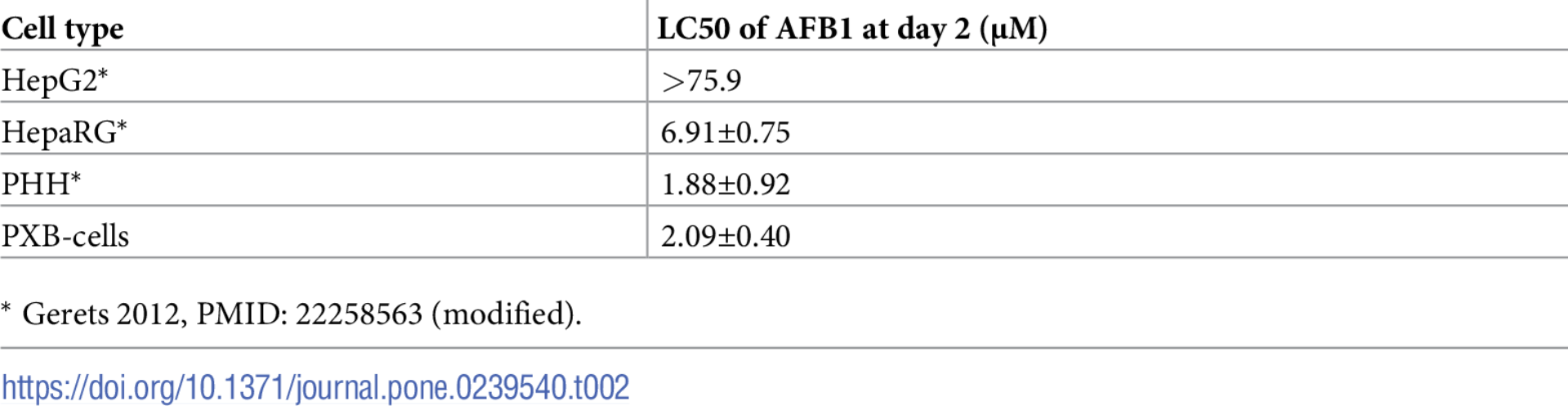
Table 1: Comparison of the half-maximal lethal concentration (LC50) of Aflatoxin B1 (AFB1) for HepG2, HepaRG, primary human hepatocytes (PHH), and PXB-cells. (Ishida Y, et al., 2020)
Mitochondrial toxicity is an important parameter in DILI studies. Cryopreservation damages mitochondrial function, which make it difficult to detect toxicity in typical PHH experiments.10 The mitochondria in fresh PXB-cells are highly functional compared to cryopreserved PHHs.16 Additionally, PXB-cells were used to assess the mitochondrial toxicity of compounds (flutamide and phenformin). For these experiments glucose was substituted with galactose, as this switch made the PXB-cells more sensitive to rotenone toxicity. Unlike PXB-cells, sugar substitution decreased cell viability substantially in PHHs, demonstrating the versatility of PXB-cells for metabolic assays. ATP was significantly decreased after exposure to flutamide and phenformin (Figure 5).16 Although, it is important to note that PXB-cells cultured in galactose also had slight reductions in ATP for the negative control compounds (bicalutamide and metformin), this effect is thought to not be biologically relevant however, further investigation is needed (Figure 5).16
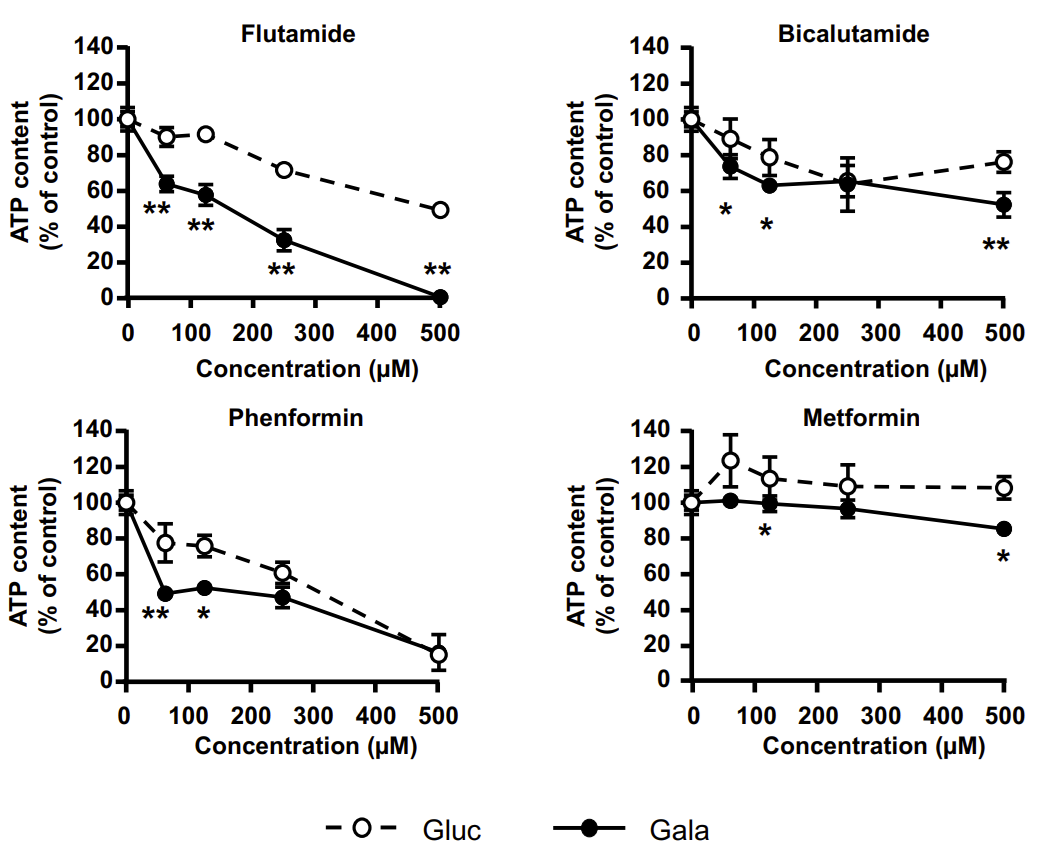
Figure 5: ATP content was measured to determine mitochondrial toxicity for compounds. PXB-cells were cultured in media containing either glucose (open circles) or galactose (closed circles) for 5 days before being exposed to flutamide, bicalutamide, phenformin, or metformin for 24 hours prior to ATP measurement. Statistical analysis compared galactose measurements to glucose measurements and significance is denoted as *p<0.05, **p<0.01. (Ikeyama Y, et al., 2020)
Taken together, PXB-cells have a high expression level of many of the drug metabolizing enzymes, human albumin secretion, and urea synthesis, all of which are maintained long-term. They are suitable for CYP induction and mitochondrial toxicity assays, as well as for 3D and co-culturing techniques all of which are important in detecting DILI-risk in vitro.
Novel culture system using PXB-cells to predict biliary drug clearance
Cholestasis is reported in approximately 20-40% of all DILI cases.4 As such, it is important to also investigate the biliary clearance of drugs. Traditionally, sandwich-cultured hepatocytes are used however, this method has some limitations: 1) tight junctions need to be disrupted to measure the contents of the bile canaliculi 2) excretion into the blood vs bile can not be directly measured, biliary excretion index calculations are used 3) short culture duration due to cellular toxicity, restricted assessment of drugs with low biliary clearance. To circumvent these limitations, in a recent study published by Arakawa et al., a culture system was developed to form open bile canaliculi (induced open-form bile canaliculus hepatocyte, known as icHep system).
In this study, PXB-cells, unlike PHHs, formed and maintained a monolayer which lacked obvious spacing between hepatocytes starting from day 3 during culture (Figure 6A).17 Due to the tight cell-to-cell contact of PXB-cells, they were used to develop the icHep system. To develop open canaliculi, culture plates were coated with claudin allowing for the formation of tight junctions with PXB-cells. Compared to sandwich-cultured PXB-cells, albumin secretion and urea synthesis was significantly increased in the icHep cultured PXB-cells (Figure 6B and C).17 Additionally, open bile canaliculus formation was between 35.8+6.3% to 42.2+4.3% in PXB-cells cultured in the icHep system (Figure 7).17,18 Staining of bile canaliculi markers, including multidrug resistance-associated protein 2 (MRP2), P-glycoprotein (P-gp), and bile salt export pump (BSEP), shows bile canaliculi have half-open lumen and are located at the interface of the TranswellTM plate (Figure 8).17 Suggesting that bile contents can be collected without disrupting tight junctions in the icHep system.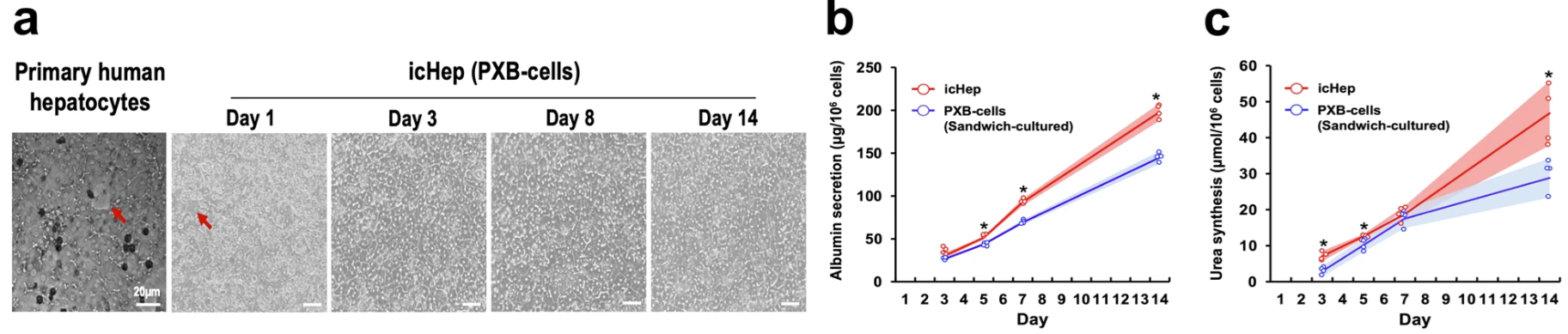
Figure 6: PXB-cells were selected for the icHep system due to their tight cell-to-cell contact. Morphology of primary human hepatocytes (left, cultured for 3 days) and PXB-cells (right, cultured for 1, 3, 8, and 14 days). Gap in monoculture (red arrow). Albumin secretion (B) and urea synthesis (C) was assessed for PXB-cells cultured in either the icHep system (red) or sandwich-cultured (blue). (Arakawa H, et al., 2023)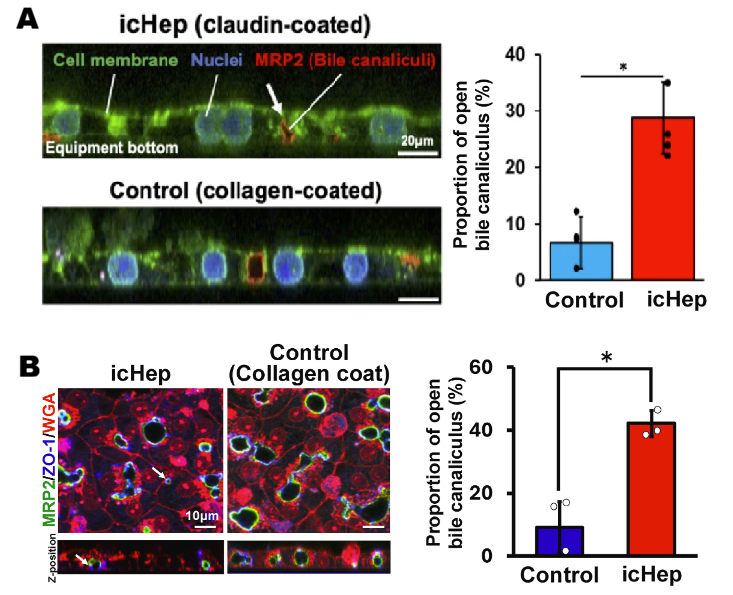
Figure 7: PXB-cells cultured in either the icHep or control plates were stained for multidrug resistance-associated protein 2 (MRP2, red), wheat germ agglutinin (WGA, green), and DRAQ5 or ZO-1 (blue) and the associated percent of open-form bile canaliculus were calculated for each experiment, Arakawa (A) and Nakazono (B). (Modified from Arakawa H, et al., 2023 and Nakazono Y, et al., 2026)

Figure 8: PXB-cells cultured in the icHep system were stained for hepatocyte transporters MRP2, P-gp, BSEP (bile canaliculi markers), OATP1B1, OATP1B3, OCT1, and NTCP (non-bile canaliculi markers), and DRAQ5 (nuclear marker). (Arakawa H, et al., 2023)
When they put the icHep system to the test, they found that drug metabolites could be detected in both the bile and blood components. When blood excreted drugs were tested (ziprasidone sulfoxide and mycophenolic acid glucuronide (MPAG)), there were significant levels detected in the media on the basolateral side of the PXB-cells (Figure 9).18 Whereas, for the bile excreted drug metabolites (celecoxib carboxylic acid and SN-38G), metabolites were detected primarily in the media facing the apical membrane of the hepatocytes (Figure 9).18 However, it is important to note that in this system MRP3 expression is not limited to the basolateral membrane, which could impact the partitioning of metabolites. Importantly, unlike traditional sandwich-cultured methods, the drug metabolites were detected up to 120 minutes after treatment (Figure 9).18 Taken together, PXB-cells cultured in the icHep system are a valuable tool for evaluating drug metabolism and biliary excretion.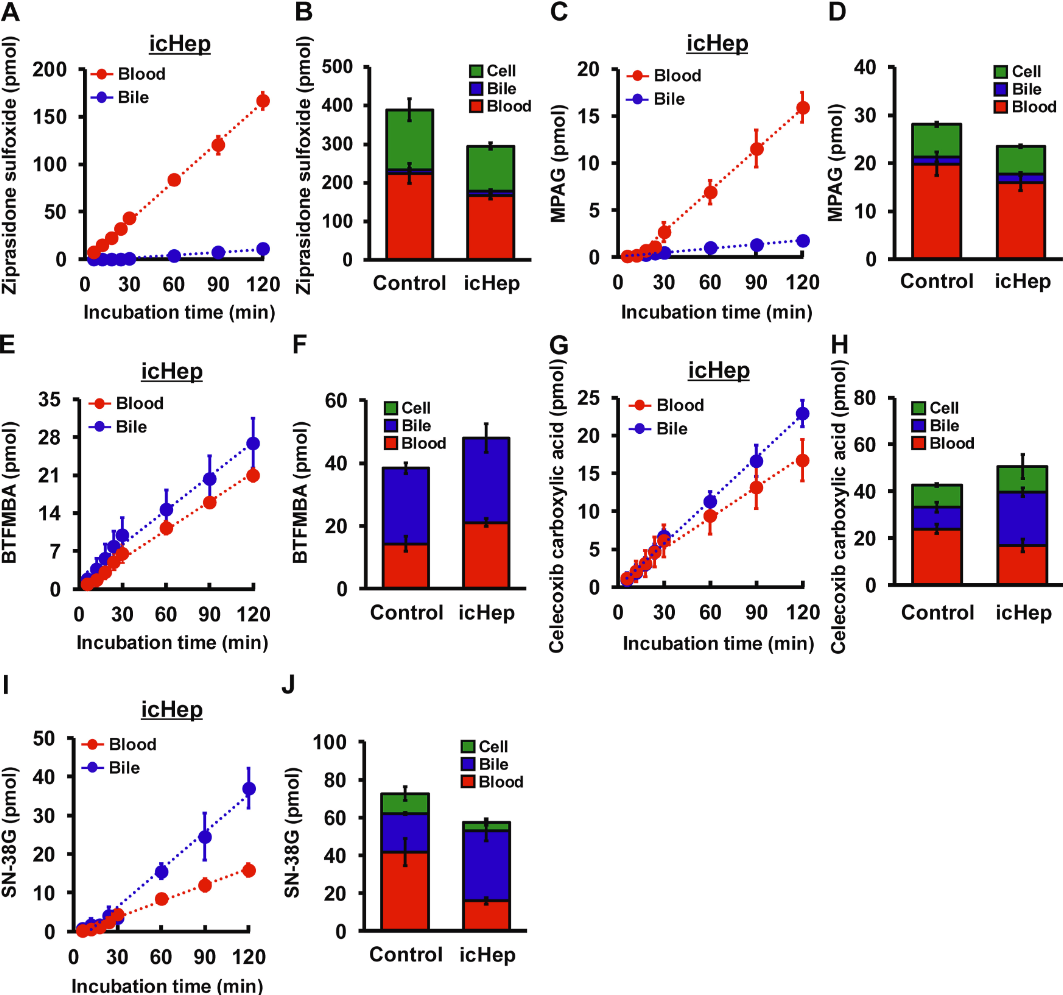
Figure 9: Drug partitioning of ziprasidone (A, B), mycophenolic acid (C, D), torcetrapib (E, F), celecoxib (G, H), and SN-38 (I, J) using PXB-cells cultured in the icHep system. Accumulation of the metabolites were measured from 0 to 120 minutes for each drug metabolite (A, C, E, G, and I), as well as the amount in the culture chambers associated with blood (red), and bile (blue), and intracellular measured at 120 minutes post-treatment for each drug metabolite (B, D, F, H, and J). (Nakazono Y, et al., 2026)
Conclusion
PXB-cells are available in two formats, cryopreserved and freshly isolated. Each format has their advantages, but both express high levels of drug metabolizing enzymes/transporters and are long-term culturable making them a good option for DILI evaluation. We recently compared our fresh and cryopreserved PXB-cells here.

Contact us today to discuss how PXB-cells can be used to enhance your toxicity/DILI research.
References
- Chen M, et al., DILIrank: the largest reference drug list ranked by the risk for developing drug-induced liver injury in humans. Drug Discov Today. (2016) 21(4):648-653. doi: 10.1016/j.drudis.2016.02.015.
- Björnsson ES, The epidemiology of newly recognized causes of drug-induced liver injury: an update. (2024) 17(4):520. doi: 10.3390/ph17040520
- Mihajlovic M and Vinken M, Mitochondria as the target of hepatotoxicity and drug-induced liver injury: molecular mechanisms and detection methods. Int J Mol Sci. (2022) 23(6):3315 doi: 10.3390/ijms23063315
- Drees A et al., Optimization of the drug-induced cholestasis index based on advanced modeling for predicting liver toxicity. Toxicology. (2025) 514:154119. doi: 10.1016/j.tox.2025.154119
- Foster JR, et al., Differential effect of troglitazone on the human bile acid transporters, MRP2 and BSEP, in the PXB hepatic chimeric mouse. Toxicol Pathol. (2012) 40(8):1106-16. doi: 10.1177/0192623312447542
- Feng B et al., Evaluation of the utility of PXB chimeric mice for predicting human liver partitioning of hepatic organic anion-transporting polypeptide transporter substrates. Drug Metabolism and Disposition. (2021) 49(3):254-264. doi: 10/1124/dmd.120.000276
- Shrimali S et al., New approach methodologies (NAMs) for drug-induced liver injury (DILI): Where are we now? Drug Discovery Today. (2025) 104452. doi: 10.1016/j.drudis.2025.104452
- Horiuchi S et al., Consideration of commercially available hepatocytes as cell sources for liver-microphysiological systems by comparing liver characteristics. Pharmaceutics. (2022) 15(1):55. doi: 10.3390/pharmaceutics15010055
- Yamasaki C, et al., Culture density contributes to hepatic functions of fresh human hepatocytes isolated from chimeric mice with humanized livers: novel, long-term, functional two-dimensional in vitro tool for developing new drugs. PLoS One (2020) 15(9):e0237809. doi: 10.1371/journal.pone.0237809
- Kakuni M, et al., Chimeric mice with humanized livers: a unique tool for in vivo and in vitro enzyme induction studies. Int J Mol Sci. (2013) 15(1):58-74. doi: 10.3390/ijms15010058
- Watari R, et al., A long-term culture system based on a collagen vitrigel membrane chamber that supports liver-specific functions of hepatocytes isolated from mice with humanized livers. J Toxicol Sci. (2018) 43(8):521-529 doi: 10.2131/jts.43.521
- Shinohara M, et al., Coculture with hiPS-derived intestinal cells enhanced human hepatocyte functions in a pneumatic-pressure-driven two-organ microphysiological system. Sci Rep. (2021) 11(1):5437 doi: 10.1038/s41598-021-84861-y
- Kurniawan DA, et al., Gut-liver microphysiological systems revealed potential crosstalk mechanism modulating drug metabolism. PNAS Nexus. (2024) 3(2):pgae070 doi: 10.1093/pnasnexus/pgae070
- Ishida Y, et al., Detection of acute toxicity of aflatoxin B1 to human hepatocytes in vitro and in vivo using chimeric mice with humanized livers. PLoS One. (2020) 15(9):e0239540 doi: 10.1371/journal.pone.0239540
- Naito Y, et al., Constructing vascularized hepatic tissue by cell-assembled viscous tissue sedimentation method and its application for vascular toxicity assessment. Acta Biomaterialia (2022) 140:275-288 doi: 10.1016/j.actbio.2021.11.027
- Ikeyama Y, et al., Successful energy shift from glycolysis to mitochondrial oxidative phosphorylation in freshly isolated hepatocytes from humanized mice liver. Toxicology in vitro (2020) 65:104785 doi: 10.1016/j.tiv.2020.104785
- Arakawa H, et al., Induction of open-form bile canaliculus formation by hepatocytes for evaluation of biliary drug excretion. Communications biology (2023) 6:866 doi: 10.1038/s42003-023-05216-z
- Nakazono Y, et al., In vitro recapitulation of drug metabolite partitioning into the bile and blood using the icHep system consisting of hepatocytes with an induced open-form bile canaliculus. Chem Biol Interact. (2026) 427:111931 doi: 10.1016/j.cbi.2026.111931