
Drug development requires preclinical evaluation to determine the safety profile and potential efficacy, which includes understanding how a compound is absorbed, distributed, metabolized, and excreted (ADME). However, even with preclinical studies, around 80~90% of drug candidates will fail to make it to the market.1, 2 The top reasons for failure include: 1. toxicity (30%), 2. ineffectiveness (40~50%), and 3. reduced ADME (10~15%).2 Animal models are used to predict human ADME and safety profiles however, these studies do not always correlate to clinical findings and often overestimate the potential of drug candidates.3, 4 Given this low success rate, it is important to understand the driving factors that lead to drug failure. Here, we will discuss how species-specific differences in metabolism might contribute to the failed clinical success of drug candidates. Then, we will introduce the humanized liver mouse model and other alternative preclinical models that can better predict clinical success.
Species-specific differences in drug metabolism
The vast majority of drugs are primarily metabolized by one of the cytochrome P450 (CYP) enzymes.5 It is well known that CYP expression is species-specific, with differences in both the number of isoforms for each subfamily and their relative abundance (Table 1).6-16 Furthermore, slight differences in the amino acid sequence can affect the catalytic site which controls the metabolism rate of CYPs, with reported differences being >3-fold between mouse and human CYPs.17 Additionally, nuclear receptors, including pregnane x receptor (PXR), constitutive androstane receptor (CAR), and aryl hydrocarbon receptor (AHR), have species-specific differences in their binding sites.18, 19 These nuclear receptors are primarily responsible for CYP induction and can therefore greatly impact drug metabolism through their regulation of drug-metabolizing enzymes.
|
Family |
Sub-family | Human | PXB-mouse | Mouse | Rat | Dog | Monkey |
| CYP1 | A | 1A1, 1A2 | 1A1, 1A2 | 1A1, 1A2 | 1A1, 1A2 | 1A1, 1A2 | 1A1, 1A2 |
| B | 1B1 | 1B1* | 1B1 | 1B1 | 1B1 | 1B1 | |
| CYP2 |
A |
2A6, 2A6, 2A13 |
2A6, 2A7*, 2A13* |
2A4, 2A5, 2A12, 2A22, | 2A1, 2A2, 2A3 | 2A13, 2A25 | 2A23, 2A24 |
| B | 2B6, 2B7 | 2B6 | 2B9, 2B10 | 2B11 | 2B11 | 2B11 | |
| C | 2C8, 2C9, 2C18, 2C19 | 2C8, 2C9, 2C18*, 2C19 | 2C9, 2C37, 2C38, 2C39, 2C40, 2C44, 2C50, 2C54, 2C55 | 2C6, 2C7, 2C11, 2C12, 2C13, 2C22, 2C23 | 2C1, 2C41 | 2C20, 2C43 | |
| D | 2D6, 2D7, 2D8 | 2D6, 2D7* | 2D9, 2D10, 2D11, 2D12, 2D13, 2D22, 2D26, 2D34, 2D40 | 2D1, 2D2, 2D3, 2D4, 2D5, 2D18 | 2D15 | 2D17, 2D19, 2D29, 2D30 | |
| E |
2E1 |
2E1 |
2E1 | 2E1 | 2E1 | 2E1 | |
| CYP3 | A |
3A4, 3A5, 3A7, 3A43 |
3A4, 3A5, 3A7, 3A43* |
3A11, 3A13, 3A16, 3A25, 3A41, 3A44 | 3A1/3A23, 3A2, 3A9, 3A18, 3A62 | 3A12, 3A26 | 3A8 |
| CYP4 | A |
4A11 |
4A11 |
4A12A, 4A14 | 4A1, 4A2, 4A3, 4A8 | 4A37, 4A38, 4A39 | 4A11 |
To add to the complexity of drug metabolism predictions in pre-clinical models, drug clearance is affected by hepatic transporter expression and liver zonation. Transporters, such as organic anion transporting polypeptides (OATPs) and organic cation transporter (OCT) have species-specific differences in substrate specificity, expression profiles, and homology, which impact human-metabolism predictions.20, 21 In regards to the liver anatomy there are clear differences, for example rats lack a gallbladder whereas it is present in humans, mice, monkeys, pigs, and other preclinical models. Additionally, many preclinical models have multiple liver lobes whereas humans do not. It is known that liver zonation plays a role in drug metabolism, since CYP expression is primarily located in the pericentral (zone 3) region for humans.22 Unlike humans, the zonation expression profile for CYP1A2 in rats and pigs have restricted or panlobular expression profiles, respectively. Whereas mice have similar zonation patterns as humans for CYP1A2 and CYP3A4, primarily located in the pericentral region.22 It is important to consider these species-specific differences when selecting preclinical models for ADME studies. Next, we will introduce another preclinical model that has been exceling in predicting human-specific drug metabolism and drug-drug interactions (DDI).
Predict human-specific drug clearance and drug-drug interactions with the PXB-mouse
The PXB-mouse is a humanized liver mouse model that has ~97% human hepatocyte engraftment and expresses similar levels of CYP enzymes, hepatic transporters, and has a similar zonation for CYP2E1 as humans.11, 23 It is important to note that while this model excels for the majority of compounds, it might lack the ability to predict immune-mediated drug-induced liver injury given that the model lacks an adaptive immune system. Additionally, the PXB-mouse liver has residual mouse hepatocytes which could impact drug metabolism. Using a SCID mouse control or, for sensitive compounds, selective knock-down of mouse CYPs will help rule out the involvement of murine hepatocytes.9, 10 Importantly and despite this, the PXB-mouse has accurately predicted human-specific drug-metabolism for a wide-variety of compounds including those that are cleared by non-CYP-mediated metabolism.
In regards to CYP-mediated drug metabolism the PXB-mouse has been able to accurately predict CYP-mediated clearance and DDI for multiple CYP isoforms. For example, Nakayama et al., demonstrated that the PXB-mouse could be used to predict CYP3A4 DDI.24 Repeat dosing with efavirenz effectively induces CYP3A4 induction in PXB-mice similar to clinical findings (Figure 1).24 Rifampicin also induces CYP3A4, albeit at slightly higher levels than humans (Relative fold-change of CYP3A is 9.3 in PXB-mice compared to 7.8 in human liver).24
The magnitude of CYP3A-mediated DDI was predicted within 15% of clinical values in the PXB-mouse.25
PXB-mice accurately predicted the human-clearance of several compounds (Figure 2B), including midazolam, alprazolam, and theophylline, unlike the in vitro predictions with primary human hepatocytes (Figure 2A) and SCID mice (Figure 2C).25 Furthermore, PXB-mice can be used to determine which CYP isoforms play a role in the drug metabolism for compounds since they express human-specific CYP isoforms.26, 27
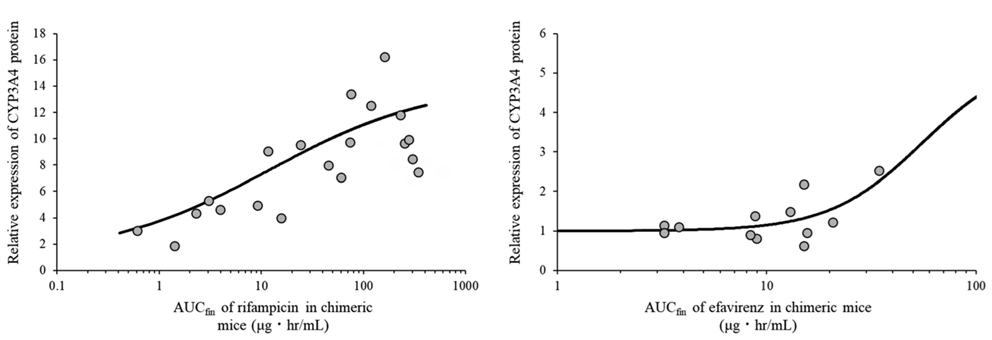
Figure 1: Induction of CYP3A4 protein by rifampicin (left) and efavirenz (right) in PXB-mice after repeated administration. (Adapted from Nakayama K, et al., 2025)24
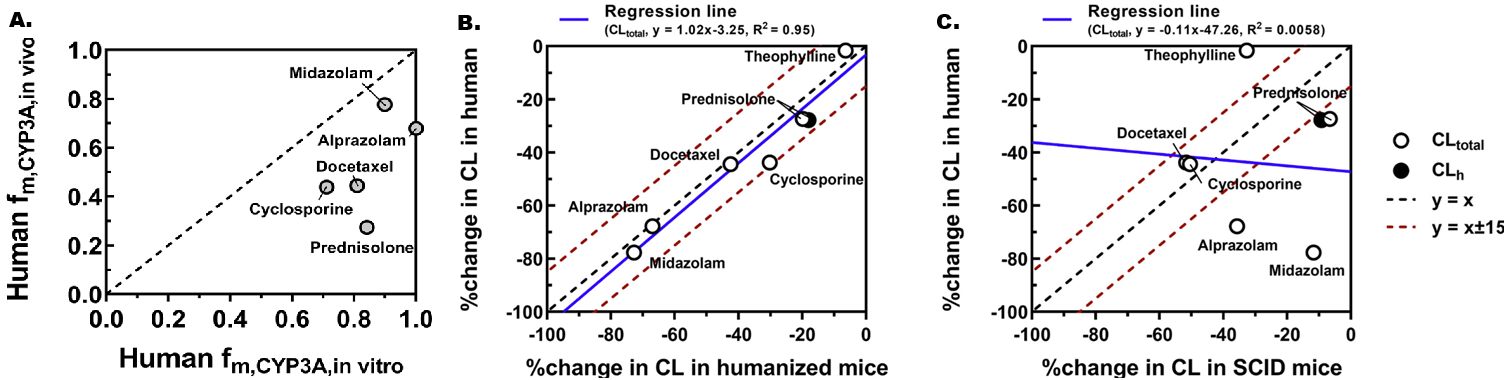
Figure 2: Comparison of human clearance (fraction metabolized by CYP3A) in vitro versus in vivo. The dotted line represents y=x. (A) Correlation of the percent change in clearance between humans and PXB-mice (B) or SCID mice (C) was analyzed. White circles represent CLtotal (total plasma clearance) and black circles CLh (hepatic plasma clearance). The linear regression best fit for CLh is denoted by the blue line. The black dotted line represents y=x and the red dotted lines represent y=x+15. (Modified from Miyake T, et al., 2023)25
There are compounds that are metabolized by non-CYP enzymes such as uridine diphosphate-glucuronosyltransferase (UGT) and alcohol dehydrogenase (ADH)/aldehyde dehydrogenase (ALDH)-mediated metabolism. Importantly, the PXB-mouse has been shown to accurately predict clearance for these compounds as well. In a recent published study, PXB-mice were administered with TMG-123, an alcohol containing compound, to predict which drug-metabolizing enzymes are involved in humans.27 This paper demonstrated that while CYP2B6, CYP2C8, CYP2E1, and CYP3A4/5 contributed to TMG-123 metabolism, ADH/ALDH was the primary metabolizing pathway.27 For compounds metabolized by UGT, PXB-mice accurately predicted human clearance in 100% of the compounds tested (Figure 3B).28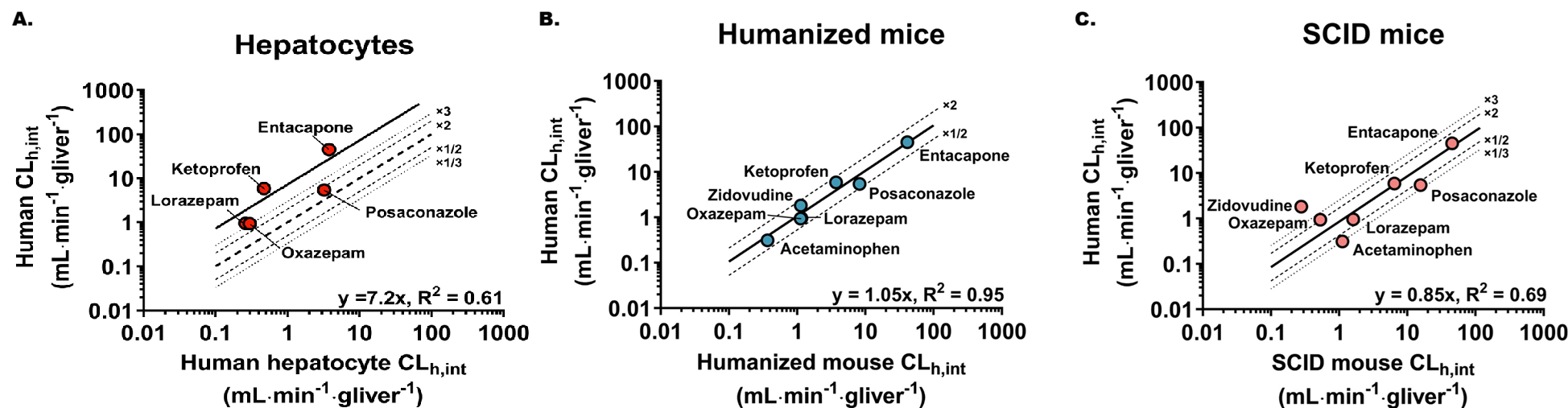
Figure 3: PXB-mice more accurately predict human clearance (within 2-fold error) than in vitro hepatocyte and SCID mice. Correlation of human clearance between hepatocytes (A), PXB-mice (B), and SCID mice (C). Solid line is the nonlinear regression line. The dashed line represents 2-fold and the dotted lines represent 3-fold. (Modified from Miyake T, et al., 2025)28
In fact, the PXB-mouse model outperformed in vitro human hepatocytes (Figure 3A), SCID (Figure 3C), and monkey (the 3-fold margin of error (MOE) was 83% and the 2-fold MOE was 58%) for UGT-, and CYP-mediated clearance of compounds as well as for low clearance compounds (89% of 9 compounds tested were within 2-fold range for the PXB-mouse).28, 29, 30 Additionally, this model can accurately predict a drugs half-life. Of 14 compounds tested, ten compounds half-life predictions were within 2-fold error demonstrating the versatility of the PXB-mouse model (Figure 4).31 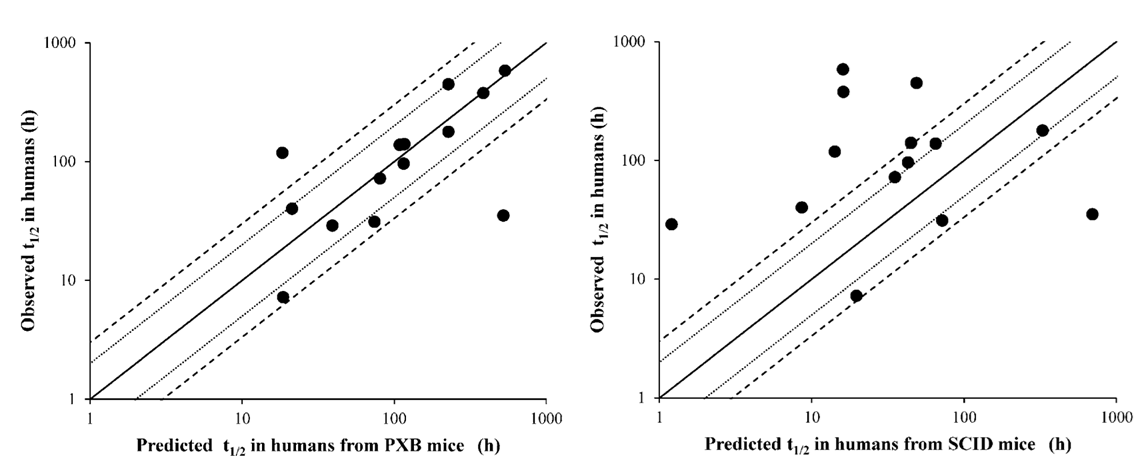
Figure 4: Correlation analysis between half-life predictions and observed half-life in human datasets using PXB-mice (left) and SCID control mice (right). The solid black line is the best-fit line, the area between the dotted lines is within two-fold error and the area between the long-dashed lines is within 3-fold error. (Miyamoto M, et al., 2019)31
Taken together, the PXB-mouse is a versatile model capable of accurately predicting human-specific PK and DDI for a wide variety of compounds. Contact our scientific experts to discuss how the PXB-mouse model can enhance your PK/DDI research.
PXB-cells: long-term primary human hepatocytes for in vitro ADME/DMPK
There is a push to greatly reduce animal testing globally, increasing the need for new approach methodologies (NAM) and computational models.32, 33 Our fresh and cryopreserved PXB-cells (isolated human hepatocytes from our humanized liver mouse model (PXB-mice)) can be maintained in culture for >30 days and have high expression of drug metabolizing enzymes, transporters, as well as high liver functionality. We recently covered how the PXB-cells can be used in NAMs in more depth, see our blog post PHH drive advances in NAMs. Here we will focus on the versatility of these cells for DMPK.
Fresh PXB-cells express similar levels of CYP enzymes as cryopreserved and primary human hepatocytes (PHH) (Figure 5)34, and generally have a higher expression of Phase I and II enzymes compared to Huh7 and HepG2 cell lines (Figure 6).35 In fact, confluent cultures of PXB-cells express the drug metabolizing enzymes long-term (after 21 days).36 Having high expression levels of CYP enzymes and being able to culture the PXB-cells long-term makes this model ideal for in vitro ADME/DMPK studies.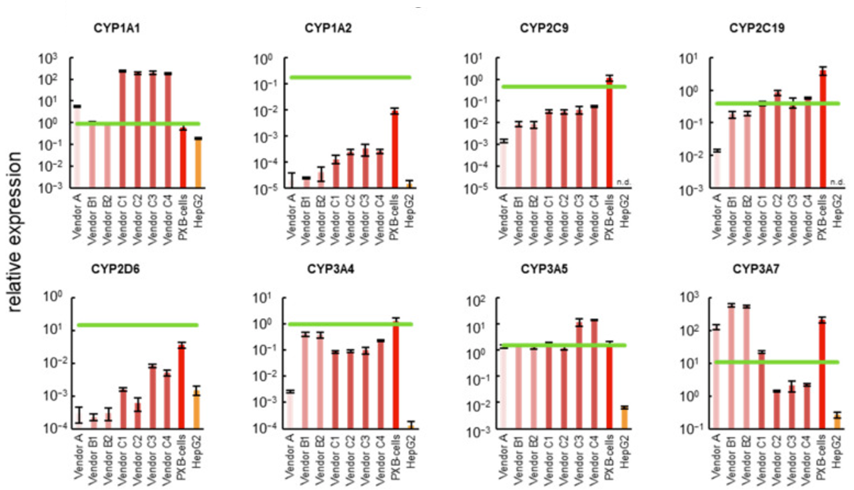
Figure 5: Comparison of gene expression of CYP isoforms for PXB-cells, hepatocyte-like cells derived from human induced pluripotent stem cells available from three vendors (Vendor A, B, and C), and HepG2 cells. The average expression of 22 primary hepatocyte donor lots is shown as a green line. (Modified from Horiuchi S, et al., 2022)34
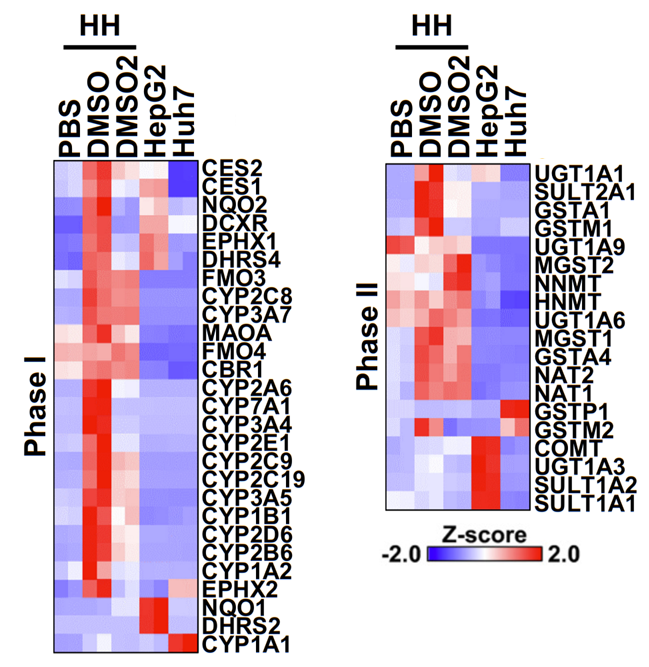
Figure 6: PXB-cells express high levels of phase I and II enzymes when cultured with DMSO. Phase I and II drug metabolizing enzyme expression of PXB-cells (HH) cultured in media containing either DMSO, DMSO2 or PBS as well as HepG2, and Huh7 cell lines were assessed at 14 days. (Modified from Sugahara G, et al., 2023)35
PXB-cells are useful for CYP activity assays and can be used in co-culture systems to further enhance the CYP activity of PXB-cells. 37, 38 Furthermore they can be used for CYP-mediated toxicity studies. In a recent published study, PXB-cells were treated with a CYP inhibitor, aminobenzotriazole (ABT), prior to aflatoxin B (AFB1) exposure to determine whether CYP activation was required for AFB1 hepatoxicity. AFB1 toxicity was reduced when pan-CYP activities were inhibited (Figure 7).39 Using siRNA knockdown of CYP3A4 demonstrated that this enzyme is involved in AFB1 toxicity, as cell viability was improved with the loss of CYP3A4 compared to control siRNA.39 Taken together, PXB-cells express high levels of CYP long-term and are susceptible to CYP induction making them an ideal in vitro model for predicting drug metabolism and toxicity. 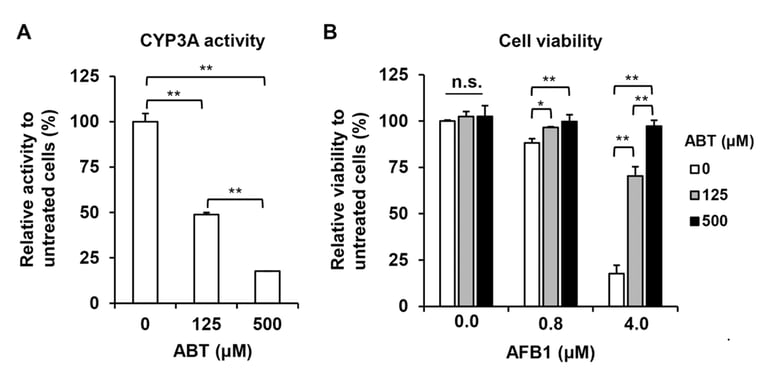
Figure 7: CYP inhibition significantly improves cell viability in aflatoxin-treated PXB-cells. CYP3A activity was measured in PXB-cells 5 days after treatment with aminobenzotriazole (ABT) or negative control (A). Cell viability was assessed for PXB-cells that were exposed to aflatoxin B (AFB1) with or without ABT treatment for 8 days. (B) Statistical significance is denoted as *p<0.05, **p<0.01, n.s. not significant. (Ishida Y, et al., 2020)39
Conclusion
Taken together, the PXB-mouse and PXB-cell models are valuable tools for in vivo and in vitro ADME/DMPK studies. Interested in learning more about our models? We have compiled a list of frequently asked questions below and encourage you to reach out to our scientific team here to discuss these models further!

Frequently Asked Questions
What is a humanized liver mouse model?
A humanized liver mouse model is an immunodeficient mouse whose native hepatocytes are replaced with primary human hepatocytes. The PXB-mouse achieves >95% engraftment, reconstructing human-specific drug-metabolizing enzymes, transporters, and liver zonation for translational ADME and DDI studies.
Can the PXB-mouse predict CYP3A4 drug-drug interactions?
Yes. PXB-mice reproduce clinical CYP3A4 induction by efavirenz and rifampicin and have accurately predicted CYP3A4-mediated DDI and clearance for compounds such as midazolam and alprazolam, outperforming in vitro human hepatocyte predictions.
How does the PXB-mouse compare to primary human hepatocytes?
The PXB-mouse captures in vivo processes (i.e. hepatic uptake, transporter activity, biliary excretion) that static in vitro hepatocyte assays miss, yielding more accurate human clearance predictions, including for low-clearance and non-CYP (UGT, ADH/ALDH) compounds.
What are the limitations of the PXB-mouse?
It lacks an adaptive immune system, which limits immune-mediated drug-induced liver injury studies, and it retains residual mouse hepatocytes. SCID controls or selective knockdown of mouse CYPs can rule out murine contribution for sensitive compounds.
What are PXB-cells?
PXB-cells are ~95% pure human hepatocytes isolated from highly-humanized PXB-mice. The cells are shipped as either freshly-plated or cryopreserved and they express high levels of drug metabolizing enzymes and transporters, making them ideal for in vitro ADME/DMPK studies.
How do PXB-cells compare to traditional cryopreserved primary human hepatocytes?
The PXB-cells are plateable, long-term culturable (up to 40 days or more), and their hepatic function and expression of drug metabolizing enzymes is maintained throughout. PXB-cells are available with the same donor lot for years, minimizing the need for lot-to-lot validation studies. Unlike PXB-cells, commercially available cryopreserved PHH’s are not all plateable, and those that plate can not be maintained long-term.
What are the limitations of PXB-cells?
PXB-cells have some residual mouse hepatocytes immediately after isolation, however, the % of murine cells decreases in culture over time.
References
- Yamaguchi S, et al., Approval success rates of drug candidates based on target, action, modality, application, and their combinations. Clin Transl Sci. (2021) Apr 8;14(3):1113-1122. doi: 10.1111/cts.12980.
- Sun D, et al., Why 90% of clinical drug development fails and how to improve it? Acta Pharm Sin B. (2022) Feb 11;12(7):3049-3062. doi: 10.1016/j.apsb.2022.02.002.
- Mak IWY, et al. Lost in translation: animal models and clinical trials in cancer treatment. Am J Transl Res. (2014) Jan 15;6(2):114-118. PMID: 24489990
- Marshall LJ, et al. Poor translatability of biomedical research using animals – a narrative review. Altern Lab Anim. (2023) Mar;51(2):102-135. doi: 10.1177/02611929231157756.
- Zhao M, et al., Cytochrome P450 enzymes and drug metabolism in humans. Int J Mol Sci. (2021) Nov 26;22(23):12808. doi: 10.3390/ijms222312808.
- Martignoni M, et al., Species differences between mouse, rat, dog, monkey, and human CYP-mediated drug metabolism, inhibition and induction. Expert Opin Drug Metab Toxicol. (2006) Dec;2(6):875-94. doi: 10.1517/17425255.2.6.875.
- Hammer H, et al., Cross-species analysis of hepatic cytochrome P450 and transport protein expression. Arch Toxicol. (2021) Jan; 95(1):117-133. doi: 10.1007/s00204-020-02939-4. Epub 2020 Nov. 4.
- Albadry M, et al., Cross-species variability in lobular geometry and cytochrome P450 hepatic zonation: insights into CYP1A2, CYP2D6, CYP2E1, and CYP3A4. Front. Pharmacol. (2024) May 16:15:1404938. doi: 10.3389/fphar.2024.1404938. eCollection 2024.
- Yamazaki K, et al., Species-specific gene expression manipulation in humanized livers of chimeric mice via siRNA-encapsulated lipid nanoparticle treatment. Mol Ther Methods Clin Dev. (2025) Apr 14;33(2):101466. doi: 10.1016/j.omtm.2025.101466
- Sultana N, et al., Application of humanized mice to toxicology studies: properties of chimeric mice with humanized liver (PXB-mice) for hepatotoxicity. J Toxicol Pathol. (2025) Feb 12;38(2):183-189. doi: 10.1293/tox.2024-0092.
- Tateno C, et al., Morphological and microarray analyses of human hepatocytes from xenogeneic host livers. Laboratory Investigation (2013) 93(1):54-71. doi: 10.1038/labinvest.2012.158
- Kikuchi R, et al., Effect of hepatitis C virus infection on the mRNA expression of drug transporters and cytochrome P450 enzymes in chimeric mice with humanized liver. Drug Metab Dispos. (2010) Nov;38(11):1954-61. doi: 10.1124/dmd.109.031732
- Cowart LA, et al., The CYP4A isoforms hydroxylate epoxyeicosatrienoic acids to form high affinity peroxisome proliferator-activated receptor ligands. J of Biol Chem (2002) Sep 20;277(38):35105-12 doi: 10.1074/jbc.M201575200
- Graham RA, et al., Cloning, tissue expression, and regulation of beagle dog CYP4A genes. Toxicol Sci (2006) Aug;92(2):356-67. doi: 10.1093/toxsci/kfl009
- Uno Y, et al., Cynomolgus macaque CYP4 isoforms are functional, metabolizing arachidonic acid. J Vet Med Sci. (2011) Apr;73(4):487-90. doi: 10.1292/jvms.10-0333
- Nebert DW, et al., Human cytochromes P450 in health and disease. Philos Trans R Soc Lond B Biol Sci. (2013) Jan 6;368(1612):20120431. doi: 10.1098/rstb.2012.0431
- Uno S, et al., CYP1A1 and CYP1A2 expression: Comparing ‘humanized’ mouse lines and wild-type mice; comparing human and mouse hepatoma-derived cell lines. Toxicol Appl Pharmacol. (2009) Nov 15;237(1):119-126. doi:10.1016/j.taap.2009.03.001
- Iyer M, et al., Functional evolution of the pregnane X receptor. Expert Opin Drug Metab Toxicol. (2006) Jun; 2(3):381-397. doi: 10.1517/17425255.2.3.381
- Flaveny CA, et al., Differential gene regulation by the human and mouse aryl hydrocarbon receptor. Toxicol Sci (2009) Dec 31; 114(2):217-225. doi: 10.1093/toxsci/kfp308
- Grime K and Paine SW, Species differences in biliary clearance and possible relevance of hepatic uptake and efflux transporters involvement. Drug Metab Dispos. (2013) Feb;41(2):372-8. doi: 10.1124/dmd.112.049312
- Morse BL, et al., Comparison of hepatic transporter tissue expression in rodents and interspecies hepatic OCT1 activity. AAPS J. (2021) Apr 26;23(3):58. doi: 10.1208/s12248-021-00583-z.
- Albadry M, et al., Cross-species variability in lobular geometry and cytochrome P450 hepatic zonation: insights into CYP1A2, CYP2D6, CYP2E1, and CYP3A4. Front Pharmacol. (2024) May 16:15:1404938. doi: 10.3389/fphar.2024.1404938
- Miyamoto M, et al., Prediction of human pharmacokinetics of long half-life compounds using chimeric mice with humanized liver. Xenobiotica (2019) Dec;49(12):1379-1387. doi: 10.1080/00498254.2019.1579394
- Nakayama K, et al., Quantitative prediction of drug-drug interactions arising from CYP3A4 induction using chimeric mice with humanized liver. Xenobiotica (2025) 55:4, 317-238 doi: 10.1080/00498254.2025.2518239
- Miyake T, et al., Quantitative prediction of CYP3A-mediated drug-drug interactions by correctly estimating fraction metabolized using human liver chimeric mice. Br J Pharmacol (2024) Apr;181(7):1091-1106. doi: 10.1111/bph.16270
- Hayashi S, et al., Estimation of contribution of CYP2D6 to tipepidine metabolism in humans and prolongation of the half-life of tipepidine by combination use with a CYP2D6 inhibitor in chimeric mice with humanized liver. Xenobiotica (2023) Apr;53(4):241-247. doi: 10.1080/00498254.2023.2224863
- Watanabe A, et al., Quantitative prediction of human metabolites formed from the oxidation of the alcohol group of the glucokinase activator, TMG-123, using chimeric mice with humanized livers. J Pharm Sci. (2026) Mar;115(3):104177. doi: 10.1016/j.xphs.2026.104177
- Miyake T, et al., Quantitative prediction of drug disposition for uridine diphosphate-glucuronosyltransferase substrates using humanized mice. Drug Metab Dispos. (2025) Apr;53(4):100050. doi: 10.1016/j.dmd.2025.100050
- Nakayama K, et al., Prediction of human pharmacokinetics of typical compounds by a physiologically based method using chimeric mice with humanized liver. Xenobiotica (2019) Apr;49(4):404-414. doi: 10.1080/00498254.2018.1460516
- Yoshida K, et al., Prediction of human pharmacokinetics for low-clearance compounds using pharmacokinetic data from chimeric mice with humanized livers. Clin Transl Sci (2022) Jan;15(1):79-91. doi: 10.1111/cts.13070
- Miyamoto M, et al., Prediction of human pharmacokinetics of long half-life compounds using chimeric mice with humanized liver. Xenobiotica (2019) Dec;49(12):1379-1387. doi: 10.1080/00498254.2019.1579394
- FDA Roadmap to reducing animal testing in preclinical safety studies. (2025, April). https://www.fda.gov/files/newsroom/published/roadmap_to_reducing_animal_testing_in_preclinical_safety_studies.pdf
- European Union Roadmap towards phasing out animal testing. (2025, Nov). https://webgate.ec.europa.eu/circabc-ewpp/d/d/workspace/SpacesStore/2041d3d7-6104-4b77-b895-a750738abc67/download
- Horiuchi S, et al., Consideration of commercially available hepatocytes as cell sources for liver-microphysiological systems by comparing liver characteristics. Pharmaceutics (2022) Dec 24;15(1):55. doi: 10.3390/pharmaceutics15010055
- Sugahara G, et al., Long-term cell fate and functional maintenance of human hepatocyte through stepwise culture configuration. FASEB J. (2023) Feb;37(2):e22750. doi: 10.1096/fj.202201292RR
- Yamasaki C, et al., Culture density contributes to hepatic functions of fresh human hepatocytes isolated from chimeric mice with humanized livers: novel, long-term, functional two-dimensional in vitro tool for developing new drugs. PLoS One (2020) Sep 11;15(9):e0237809 doi: 10.1371/journal.pone.0237809
- Yamasaki C, et al., In vitro evaluation of cytochrome P450 and glucuronidation activities in hepatocytes isolated from liver-humanized mice. Drug Metab Pharmacokinet. (2010);25(6):539-50. doi: 10.2133/dmpk.dmpk-10-rg-047
- Kurniawan DA, et al., Gut-liver microphysiological systems revealed potential crosstalk mechanism modulating drug metabolism. PNAS Nexus (2024) Feb 9;3(2)pgae070. doi: 10/1093.pnasnexus/pgae070
- Ishida Y, et al., Detection of acute toxicity of aflatoxin B1 to human hepatocytes in vitro and in vivo using chimeric mice with humanized livers. PLoS One (2020) Sep 23;15(9):e0239540. doi: 10.1371/journal.pone.0239540.